Methane Unmasked
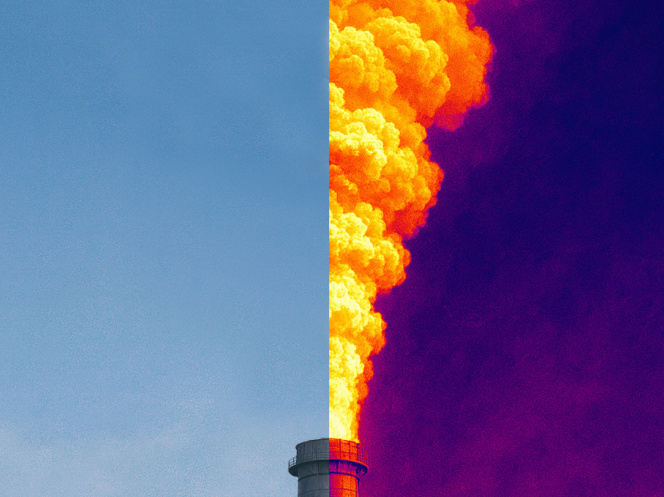
An investigation by the Changing Markets Foundation and Deutsche Umwelthilfe has found significant methane leaks at two Danish biogas plants, raising urgent questions about the climate credentials of so-called ‘green’ energy projects tied to the dairy sector.
You can download the report here (1MB).
The methane emissions were detected using industry-standard instruments, including an optical gas imaging camera and trace gas analyser, conducted by a thermo-imaging expert.
Main findings:
-
- At the Shell-owned Nature Energy plant in Videbæk (formerly part-owned by Arla), methane concentrations reached over 5,000 parts per billion (ppb), more than double the regional atmospheric average (2,077 ppb).
- The leak was observed on consecutive days at different times of day, with the measuring instruments capturing both the methane levels and the source of the leak from a compressor stack –indicating intentional rather than accidental venting.
- At Arla’s Arinco processing facility, originally linked by a pipeline to the Vidabæk plant, we filmed a methane release from a chimney.
- A Freedom of Information request by Greenpeace Denmark shows the Videbæk plant has a record of significant to major leaks, and that mismanagement of documentation on the feedstock used has allowed unsubstantiated sustainability claims to be passed down to consumers. However, some information about agricultural feedstocks was withheld.
- At the Tønder biogas plant, one of Europe’s largest, we detected atmospheric methane levels outside the facility, spiking at nearly 35,000 ppb, around 16 times higher than background levels. While the source couldn’t be pinpointed, such elevated levels raise serious concerns about methane leakage in the region.
Denmark is one of the largest biogas producers per capita in Europe. In 2023, the country introduced regulations aimed at reducing methane leaks at biogas plants. As many countries and companies turn to biogas and biomethane as ‘green’ solutions to agricultural emissions and an alternative to fossil gas, gaps in current policies must be recognised and addressed.
You might also like...

Running Latte: Slow Progress on Methane in the Dairy and Coffee Industry
An assessment of 20 of the world’s largest dairy and coffee companies, with combined revenues of over $420 billion, finds that most lack methane targets, credible action plans, or basic transparency around t...

Methane Matters: Towards a global methane agreement
At the 2021 Climate Change Conference, over 110 countries joined a pledge to reduce global methane emissions by 30% by 2030. This crucial commitment under the ‘Global Methane Pledge’ came at a time of scient...
Materially Neglected: Agricultural Methane and Investor Risk
This report, focuses on accountability, examining whether investors treat agricultural methane as a material climate and financial risk, and whether their strategies reflect this. Drawing on publicly availa...