Biogas Policies in the EU: Levelling up or locking in?
Summary
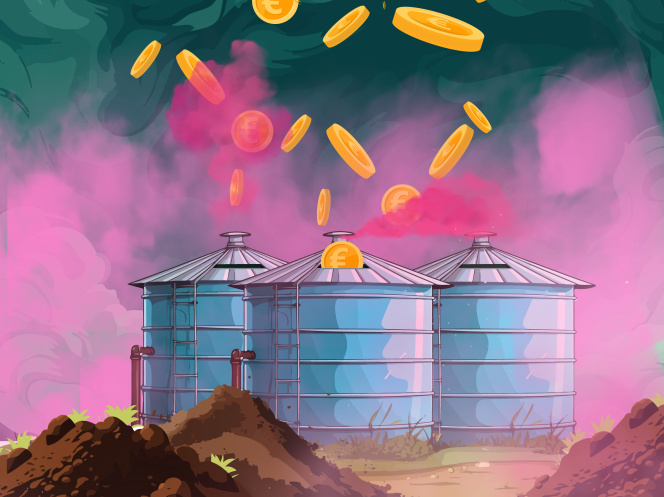
The European Union is the global leader in biogas production, with a production volume of 22.8 billion m3 in 2024. Most biogas is derived from the anaerobic digestion (AD) of organic materials such as energy crops, agricultural and food waste, and manure. Methane captured from landfills and sewage sludge also counts as biogas. Biogas is used for generating heat and power and is further upgraded into biomethane, which is comparable to fossil gas. Biomethane is injected into existing fossil gas grids – for use in households and businesses – and is used as transport fuel (as BioLNG).
This report, commissioned by the Methane Matters Coalition, examines the current status of the biogas industry in the European Union (with specific attention to member states Denmark, Germany, Ireland, the Netherlands, Poland, and Romania) and in the United Kingdom. The report analyses the market developments in the EU as a whole and in the seven countries; the environmental impacts of biogas production; the regulatory frameworks applicable; the level at which regulations cover environmental impacts; public financing schemes for biogas; and bank and investor financing for a selection of biogas companies.
A larger policy and financial analysis was undertaken by Profundo and can also be accessed via the download button.
You might also like...
Tracking Methane Action in the Dairy, Coffee and Retail Sectors: October 2026 insights
The fourth edition of our methane rankings for major food company finds signs of momentum from dairy companies, progress from just one coffee company and continued leadership vacuum from retailers.

High Steaks: How focusing on agriculture can ensure the EU meets its methane-reduction goals
The EU is currently on track for around 17% methane reductions by 2030, which falls short to the 30% target it has committed to by signing the Global Methane Pledge. It is also significantly less than what t...

Running Latte: Slow Progress on Methane in the Dairy and Coffee Industry
An assessment of 20 of the world’s largest dairy and coffee companies, with combined revenues of over $420 billion, finds that most lack methane targets, credible action plans, or basic transparency around t...