Biogas Policies in the EU: Levelling up or locking in?
Summary
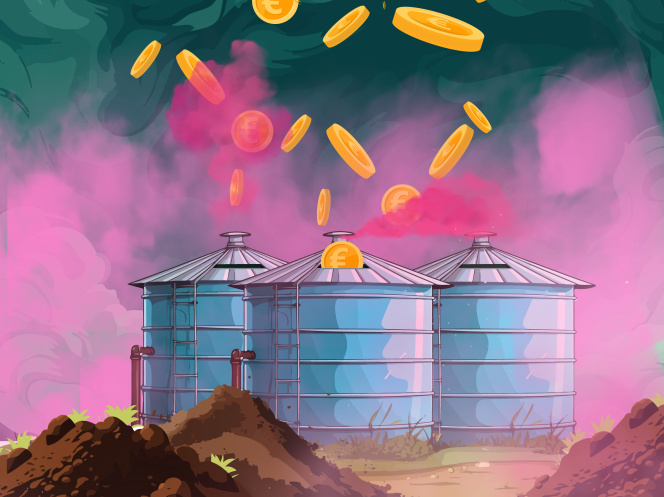
The European Union is the global leader in biogas production, with a production volume of 22.8 billion m3 in 2024. Most biogas is derived from the anaerobic digestion (AD) of organic materials such as energy crops, agricultural and food waste, and manure. Methane captured from landfills and sewage sludge also counts as biogas. Biogas is used for generating heat and power and is further upgraded into biomethane, which is comparable to fossil gas. Biomethane is injected into existing fossil gas grids – for use in households and businesses – and is used as transport fuel (as BioLNG).
You can download the full report here (2MB).
This report, commissioned by the Methane Matters Coalition, examines the current status of the biogas industry in the European Union (with specific attention to member states Denmark, Germany, Ireland, the Netherlands, Poland, and Romania) and in the United Kingdom. The report analyses the market developments in the EU as a whole and in the seven countries; the environmental impacts of biogas production; the regulatory frameworks applicable; the level at which regulations cover environmental impacts; public financing schemes for biogas; and bank and investor financing for a selection of biogas companies.
You might also like...
The Agricultural Methane Gap: Recommendations for the Global Stocktake
This briefing provides an overview of 27 country NDCs and National Energy and Climate Plans (NECPs), along with the EUs NDC, outlining how they address agricultural methane, the largest source of global meth...

Hot Money: 40 Financial Institutions are funding a climate-changing agri-methane footprint
This report focuses on the 20 investors and 20 banks that are funding the methane generating activities of 15 of the leading meat and dairy companies worldwide. Collectively these financial institutions fu...

The New Faces of GWP*: Temperature neutrality and no additional warming
This briefing represents an update of Changing Market's Seeing Stars report (2023), based on FOI requests in Ireland, New Zealand, Europe and Northern Ireland.