Late May 2025 newsletter – Dairy and coffee in the hotseat

Ranking methane action
On 14 May we launched a new report: Running Latte – Slow Progress on Methane in the Dairy and Coffee Industry.
Methane – a greenhouse gas 80 times more potent than CO₂ over 20 years – is a major driver of global heating. Animal agriculture is responsible for 32% of global methane emissions, meaning the dairy sector has a huge role to play. Running Latte assesses the efforts of 20 major dairy and coffee house companies (with a combined revenue of over $420 billion) to reduce methane emissions – and the findings are stark.
- 18 out of 20 companies scored less than half the available points
- Only 1 company – ranking leader Danone – has a methane-specific target
- Dairy-heavy coffee chains like Costa and Dunkin’ are among the worst performers, with Dunkin’ scoring zero points
- Methane accounting and transparency is rare, few companies account for methane separately
- Most companies aren’t acknowledging the need to cut dairy – despite methane’s known impact and mounting regulatory pressure
With COP30 and stricter EU legislation on the horizon, the time for delay is over. Companies that act now, by setting methane targets, developing clear action plans, and improving disclosure – will not only help curb global heating but also stay ahead of incoming rules and reputational risk.
Media coverage included reporting in The Guardian (UK), Der Standard (Austria & Germany), Público (Portugal), as well as key trade outlets such as The Grocer. And it’s already having an impact, with companies reaching out to us, and movement happening within trade bodies.
Read the full report for company scores, methodology, and our recommendations for businesses, policymakers, and consumers.
Feeding fish, starving communities
A new study by UBC reinforces long-standing environmental concerns about the fishmeal and fish oil (FMFO) industry that Changing Markets has previously exposed. Our investigations showed how European aquaculture companies were depleting local fish stocks and stripping coastal communities of vital nutrition to feed fish farms producing seafood for affluent consumers.
This new study shows many of the same countries affected by overfishing are also home to large numbers of fishmeal factories exporting to the global north – reinforcing the urgent need for binding rules to protect marine ecosystems and food security. Similarly, a recent Guardian investigation traced UK supermarket sea bass back to Senegalese fishmeal, revealing how this trade is driving local food insecurity and unemployment, particularly among women fish processors.
As our own research – and now a growing body of evidence – makes clear, the hidden costs of the global FMFO trade are devastating: undermining marine ecosystems and threatening the food security of communities that have relied on these fisheries for generations.
Welcome aboard!
In May, we also welcomed Jo Kuper as our new Communications Director. A lifelong advocate for environmental and social justice, Jo brings over two decades of global experience from leading international organisations including Greenpeace, Médecins Sans Frontières (MSF), and 350.org.
Jo has lived and worked across multiple continents, witnessing firsthand the devastating impacts of climate change around the world. With a deep belief in the need for transformational shifts in market forces, where sustainability is rewarded and ‘business-as-usual’ is penalised, Jo has long admired the work of the Changing Markets Foundation. Welcome to the team, Jo!
In the media
- The Guardian: Dairy companies ‘turning blind eye’ to global methane emissions, report suggests
- BusinessGreen: ‘It isn’t magic, but it’s close’: Better Dairy and the quest for cow-free cheese
- Which?: Fast fashion: is the quality of high street clothing getting worse?
What’s inspiring us: Must-Reads, watches, and listens
- Guardian podcast: Why you should quit your job and change the world
- Podcast: The Scottish Food History Podcast
You might also like...
Tracking Methane Action in the Dairy, Coffee and Retail Sectors: October 2026 insights
The fourth edition of our methane rankings for major food company finds signs of momentum from dairy companies, progress from just one coffee company and continued leadership vacuum from retailers.
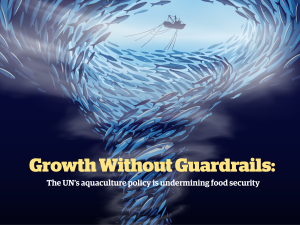
Growth without Guardrails: The UN’s aquaculture policy is undermining food security
This investigation reveals that the FAO's target to grow aquaculture by 75% by 2040 risks turning nearly half of the global wild fish catch industrial fish feed every year. Key food security protections aime...
Dairy and Coffee Methane Action Tracker: May 2026 insights
The third edition of our dairy and coffee methane rankings finds mixed progress among 23 major companies across Europe and North America. While eight companies now disclose their methane emissions and five h...