Early May 2025 newsletter – The corporate crackdown chronicle

Holding Nestlé accountable
April 16th, we attended Nestlé’s AGM to ask one critical question: Where’s the plan to cut methane?
Methane makes up 37% of Nestlé’s emissions—mostly from its dairy supply chain—and is over 80 times more potent than CO₂. Cutting it is one of the fastest ways to tackle climate change.
Nestlé claims it already reduced its methane emissions by 20% but doesn’t provide the evidence — with no target, no breakdown, and no clear plan, there’s little reason to trust this figure. Since we first exposed Nestlé’s methane blindspot, the company has begun reporting methane separately — but that’s just a start. It needs to set a methane reduction target of at least 30% by 2030.
We’re calling on Nestlé to set a science-based methane reduction target and follow through with concrete action — just like other dairy giants are starting to do.
Watch footage of us speaking to shareholders
See why we attended the AGM
Global watchdogs to fashion: Clean up your claims
In a powerful show of unity, over 20 consumer protection agencies from around the world—including the UK, France, Sweden, Ireland, and Australia—have put the fashion industry on notice. In an open letter coordinated by the International Consumer Protection and Enforcement Network (ICPEN), regulators warned brands to clean up their environmental marketing or face potential enforcement.
The message is clear: vague claims like “eco-friendly,” “green,” or “sustainable” won’t cut it without solid evidence. The letter urges brands to be specific, truthful, and transparent—and to stop making empty promises based on future goals with no clear path.
We strongly support this move to crack down on fashion greenwashing and raise the bar for environmental honesty in a notoriously polluting industry.
The greenwash corner
Compostable Coffee Pods? Grounds for misleading claims…
Lavazza UK and Dualit have earned themselves a spot in our Greenwash Hall of Shame after being called out by the UK’s Advertising Standards Authority (ASA). Both brands marketed their coffee pods and bags as “compostable” and “eco-friendly” — but forgot to mention they only break down in industrial composting facilities, not your garden heap.
The ASA ruled the claims misleading, as most consumers reasonably assume “compostable” means home compostable. Classic greenwashing: vague eco-language with little substance.
Sustainability shouldn’t be just a buzzword — especially before your morning coffee.
In the media
- The Guardian: ‘You sold it – now recycle it’: the protesters mailing worn-out clothes to the shops they bought them from
- The i Paper: How your clothes from M&S, Next and Primark could be funding Putin’s war
- Dairy Reporter: Methane emissions: Food firms’ disclosures ‘omit critical context’
What’s inspiring us: Must-Reads, watches, and listens
- The Guardian podcast: Why did Spain and Portugal go dark?
- Inside Climate News: The American Beef Industry Understood Its Climate Impact Decades Ago
- The New York Times: The More Protein, the Better?
- The Guardian: PR campaign may have fuelled food study backlash, leaked document shows
- Harry Baker: Poem
- Robin Wall Kimmerer: Braiding Sweetgrass
You might also like...

Tracking Methane Action in the Dairy, Coffee and Retail Sectors: October 2026 insights
The fourth edition of our methane rankings for major food company finds signs of momentum from dairy companies, progress from just one coffee company and continued leadership vacuum from retailers.
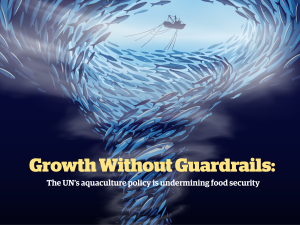
Growth without Guardrails: The UN’s aquaculture policy is undermining food security
This investigation reveals that the FAO's target to grow aquaculture by 75% by 2040 risks turning nearly half of the global wild fish catch industrial fish feed every year. Key food security protections aime...

Dairy and Coffee Methane Action Tracker: May 2026 insights
The third edition of our dairy and coffee methane rankings finds mixed progress among 23 major companies across Europe and North America. While eight companies now disclose their methane emissions and five h...