December 2025 newsletter – Wrapping 2025 & our latest fashion exposé
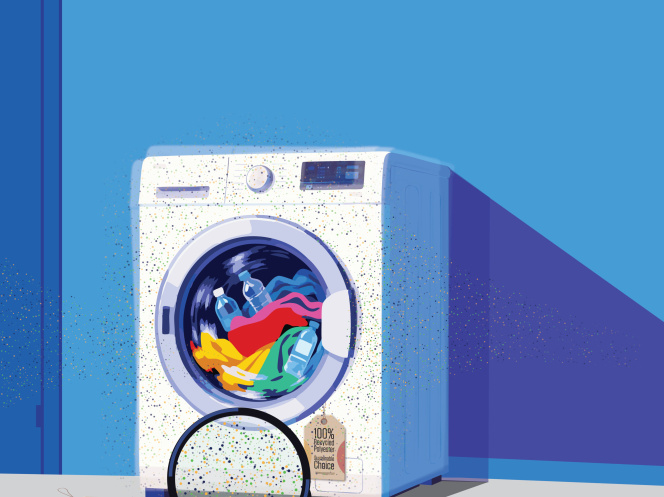
As 2025 comes to a close, we’re pleased to share our latest report, along with highlights from some key moments along the way.
Thank you for being with us in another year of making change. We wish you all the best for the holiday season, and look forward to seeing you in 2026 as we step into a new year of action!
New report: The microplastics in fashion’s “green” strategy
Earlier this month, we released our latest report, Spinning Greenwash: How the fashion industry’s shift to recycled polyester is worsening microplastic pollution.
Despite being marketed as a green solution, our investigation, carried out with scientists at Çukurova University, finds that fashion’s growing reliance on recycled polyester is worsening microplastic pollution.
We tested products from five major brands — Adidas, H&M, Nike, Shein and Zara — and found that recycled polyester sheds around 55% more microplastics than virgin polyester during washing. These fibres are also smaller, allowing them to spread more easily through the environment. They travel further, carry more chemicals, and are more easily ingested by humans and wildlife.
Our message that fashion needs to break its addiction to plastic has been picked up in more than 200 media stories, including features in AFP (via BFMTV), Elle, Euronews, The Ecologist, and Libération, and shared across high-reach platforms including MSN, Newsbreak and Yahoo.
Read the full report to explore the findings in detail and what they mean for fashion’s plastic footprint.
Learn more: Upcoming webinar
Join us in the new year for a deeper conversation on the issues raised in Spinning Greenwash.
Building on the report’s findings, we will explore how recycled polyester continues to drive microplastic pollution, examine the broader role of textiles in the global plastics crisis, and unpack how industry responses remain cloaked in greenwash. Drawing on the latest scientific research and policy analysis, speakers will examine what the evidence shows and where current approaches fall short.
We’ll be joined by experts from the Plastic Soup Foundation and The Pew Charitable Trusts for an evidence-based conversation on why this issue matters and what needs to change.
2025: A snapshot
In a busy and productive year, we’ve held companies and governments to account, tackled misinformation, and exposed greenwash.
🐮 Growing the Good
We kept agricultural methane firmly on the agenda; held companies and governments to account for their methane (in)action; exposed industry efforts to downplay methane’s climate impact; challenged attempts to weaken legislation; and questioned the rush towards biogas.
🍽️ Climate misinformation in food systems
We expanded our work on misinformation in food systems into a dedicated campaign, exposing coordinated efforts to undermine food systems transformation ahead of the second Planetary Health Diet launch, and COP30.
🛢️ Fossil fashion
We continued to challenge fashion’s addiction to plastic, and advocate for progressive legislation in the EU.
❎ Greenwash
Across our campaigns, we continued to expose corporate greenwashing, challenge misleading sustainability claims, and advocate for regulation, including enforcement action by the UK’s Competition and Markets Authority and debates around EU green claims rules.
By the numbers
- Published 10 reports and briefing papers
- Launched 1 new website: the Methane Action Tracker
- Featured in more than 1,450 media stories worldwide and authored 7 op-eds
- Hosted or co-hosted 11 in-person events and webinars
The greenwash corner
It’s been a busy year in greenwash corner, and unfortunately, there are no surprises in our 2025 naughty list of Big Meat & Dairy giants.
Welcome Tara
Tara Ganesh joined us in December 2025 as a senior campaigner. Before coming to us, Tara spent nearly 10 years at Earthsight, where Tara led some of the organisation’s most well-known investigations into illegal supply chains, corporate greenwashing and failures in sustainability certification in the global timber sector.
Tara led major reports including Flatpacked Forests, The Fixers and Blood-Stained Birch. Earlier in Tara’s career, Tara worked as a researcher at Greenpeace. Tara’s work helped expose harmful industry practices and the damaging impacts of “fast furniture,” triggered two government crackdowns on illegal logging in Ukraine, and contributed to the development of new EU policies on illegal timber supply chains and sanctions.
Having grown up by the sea in Mumbai, Tara is now based in South London. Tara likes spending time with family, dancing, exploring the city and lying down under old trees.
In the media
- Deutsche Welle: Are Europe’s fashion brands as green as they say?
- Euronews: From Nike to H&M: How the fashion industry’s “big green plan” is worsening microplastic pollution
- Follow the Money: This is the dirty truth behind Europe’s trade in second-hand clothes
What we’re reading
As the year winds down, we’re using the holiday season to read, reflect, and draw inspiration from thought-provoking books.
- The Climate Diplomat: A Personal History of the COP Conferences
- Dodge County, Incorporated: Big Ag and the Undoing of Rural America, by Sonja Trom Eayrs
- Blueprint for Revolution: How to Use Rice Pudding, Lego Men, and Other Nonviolent Techniques to Galvanize Communities, Overthrow Dictators, or Simply Change the World, by Srdja Popovic
You might also like...
Tracking Methane Action in the Dairy, Coffee and Retail Sectors: October 2026 insights
The fourth edition of our methane rankings for major food company finds signs of momentum from dairy companies, progress from just one coffee company and continued leadership vacuum from retailers.
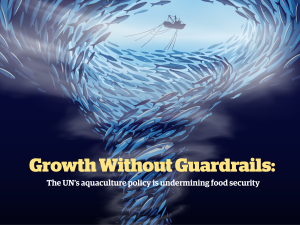
Growth without Guardrails: The UN’s aquaculture policy is undermining food security
This investigation reveals that the FAO's target to grow aquaculture by 75% by 2040 risks turning nearly half of the global wild fish catch industrial fish feed every year. Key food security protections aime...
Dairy and Coffee Methane Action Tracker: May 2026 insights
The third edition of our dairy and coffee methane rankings finds mixed progress among 23 major companies across Europe and North America. While eight companies now disclose their methane emissions and five h...