COP30 roundup newsletter November 2025: Cutting through the greenwash
COP30 has finished, and for us at Changing Markets, one thing is clear: far more work is needed to embrace the opportunity that transformation of food systems can have both for our climate and health. Despite President Lula’s efforts to position Brazil as a climate leader, the conference ended without the level of ambition needed. Beyond the lack of progress on fossil fuels phase out, a glaring omission was the absence of food systems, which despite being responsible for a third of global emissions, barely made it to the negotiating table, let alone the final text.
Key opportunities to strengthen action were missed, from the continued blind spot of agricultural emissions in methane plans, to stalled efforts on deforestation, which are driven largely by cattle farming and soy production. There was also the concerning setback of renewed pressure for land-intensive biofuels, which also compete with food security.
Although countries are expected to include food and agriculture in their nationally determined contributions (NDCs), a WWF–Climate Focus analysis released during COP shows that while 93% of updated NDCs include at least one food-systems measure, only 16% mention sustainable, healthy diets — one of the most effective levers we have.
Civil society shows the way
Despite the challenges, civil society created vital spaces for honest conversations on food, forests and methane, and this is where we focused our efforts. Together with independent experts and frontline communities, we helped build a very different momentum outside the formal negotiations.
We exposed Big Agriculture’s tactics to delay action, challenged misleading metrics like GWP*, and showed that progress is already happening in the dairy sector, where the frontrunners are reporting methane reductions (check out our updated Methane Action Tracker to see how Bel Group now leads the pack, with previous frontrunner Danone in third place).
Meanwhile, our new report, The Meat Agenda, resonated strongly with journalists, civil society groups and policymakers, sparking conversations about the impact vested interests and greenwashing have on climate action and how to push back.
Watch our event with Mighty Earth
A greenwash theatre
One of our biggest jobs was calling out the greenwash we saw everywhere. According to DeSmog, 302 agribusiness lobbyists were on the ground in Belém — including 72 from Big Meat and Dairy, almost double the size of Jamaica’s climate delegation. Meanwhile, in the year leading up to COP30, at least 195 influencers were paid by major livestock, fertiliser and meat companies, from models and news anchors to doctors and farmers, flooding social media with industry-friendly narratives.
As we highlighted in our last newsletter, the new AgriZone provided the industry with an unprecedented platform — and it lived up to expectations. Visitors entering the vast space, hosted by Brazil’s agricultural agency Embrapa, were greeted by a JBS-branded media centre, despite the company’s long-standing links to deforestation, high emissions and human rights abuses. A giant ethanol-powered SUV showcased the growing influence of the biofuel lobby, while corporate booths promoted glossy visions of “climate-smart” farming and tech-driven fixes.
Industry messaging was also part of numerous panels and discussions in the Blue Zone. JBS claimed some of its farms “removed more carbon than they emitted” and dismissed a focus on Scope 3 emissions, which make up 98% of the sector’s footprint, as unproductive “blame and shame.” Elsewhere, there were multiple screenings of World Without Cows, a pro-industry documentary produced by agribusiness firm Alltech. At a panel in the Action on Food Hub, the company’s CEO encouraged attendees to watch, saying he had commissioned the film to “broaden the debate”. Access, however, was tightly controlled and our request for tickets was denied. An activist that managed to get in wrote an honest review that cut through the film’s carefully curated narrative.
Methane at COP30
On methane, there is some good news: a new UN report shows that, for the first time, the world is collectively on track to achieve an 8% reduction by 2030. But this falls far short of the 30% cut promised under the Global Methane Pledge. The analysis confirms our findings that agriculture is largely missing from NDCs: only 4% of NDCs include quantified, time-bound agricultural methane reduction targets.
Major meat company reveals a methane emissions reduction target
In a surprising, but welcome move, Marfrig (now MBRF) became the world’s first meat company to disclose its Scope 3 methane emissions (indirect emissions from the supply chain) and outline a methane-reduction strategy, with a 33% reduction target for 2035, though the details remain unclear.
Marfrig’s commitment shows that meat companies can set transparent reporting and methane-reduction goals. How this is achieved will be critical; technical solutions can only go so far. The science is clear: we need to reduce livestock numbers worldwide to keep 1.5 °C within reach. We need to see all Big Meat and Dairy companies step up on methane action and truly shift to more sustainable practices, and for governments to ensure proper regulation to level the playing field.
‘No Additional Warming’ called out
Pushback to industry attempts to push GWP* (aka: No Additional Warming) reached the daily COP newsletter, which is read by negotiators and observers alike. And there was a fitting moment of recognition when Aotearoa/New Zealand was awarded Fossil of the Day for weakening its methane targets.
‘No additional warming’ debunked
The greenwash corner
Congratulations to the Environmental Working Group (EWG), which has successfully challenged meat giant Tyson — which together with JBS controls 50% of the US beef market — over its misleading “climate-smart beef” claims. The greenwash included the idea that its beef was environmentally friendly and that the company would eliminate all its greenhouse emissions by 2050, despite having no credible plan to do so.
The challenge echoed findings from our major report, The New Merchants of Doubt, which also reveals how major food and agriculture companies spend more on PR than on real climate solutions.
As a result of EWG’s action, Tyson agreed to remove the term “climate-smart” from its beef products. This is a significant step toward curbing deceptive marketing and holding agribusiness to account.
In the media
- Forbes: The Meat Agenda: Inside Big Ag’s COP30 Power Play
- Bloomberg: Tyson Foods Is Under Fire for Touting Its Products as Green
- La Croix: COP30 in Belem: Brazilian agribusiness on the offensive to green its image (French)
- Delo: Brazil promotes low-carbon beef at COP30 (Slovenian)
- Green Queen (op-ed): Clearing the Greenwash Fog – Challenging Agribusiness Influence at COP30
- The Grocer: Was COP30 in Brazil another cop out for climate action?
What we’re reading
- Carbon Brief: COP30: Key outcomes agreed at the UN climate talks in Belém
- DeSmog: Backed by Industry, Brazilian Hosts Seek COP30’s Blessing for Biofuels
- Data For Good, QuotaClimat and Science Feedback: Mapping climate disinformation in Brazilian and French mainstream media
You might also like...
Tracking Methane Action in the Dairy, Coffee and Retail Sectors: October 2026 insights
The fourth edition of our methane rankings for major food company finds signs of momentum from dairy companies, progress from just one coffee company and continued leadership vacuum from retailers.
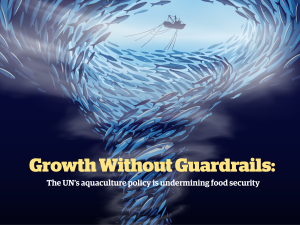
Growth without Guardrails: The UN’s aquaculture policy is undermining food security
This investigation reveals that the FAO's target to grow aquaculture by 75% by 2040 risks turning nearly half of the global wild fish catch industrial fish feed every year. Key food security protections aime...

Dairy and Coffee Methane Action Tracker: May 2026 insights
The third edition of our dairy and coffee methane rankings finds mixed progress among 23 major companies across Europe and North America. While eight companies now disclose their methane emissions and five h...