Danone has thrown down a methane challenge
From Nusa Urbancic, Changing Markets Foundation
Published on 30 January 2023 in the Financial Times: https://www.ft.com/content/fbf90623-a5df-480b-8b48-c1ce06b216c3
Danone became the first dairy company to announce its commitments to cut methane — a move that was rightly welcomed by the FT (“Danone: chewing over emissions”, Lex, January 21).
But the French dairy group is in fact an outlier in a sector that has been painfully slow to tackle its methane footprint. There is little pressure from governments — agricultural emissions are an afterthought in climate policy even though the food sector is responsible for over 40 per cent of global methane emissions.
This must change. The global methane pledge — a commitment by over 150 governments to cut methane by 30 per cent compared to the 2020 baseline — will be difficult to deliver in the rich world without tackling agriculture.
Our research shows that the EU is on track for a mere 17 per cent methane reduction by 2030, because of its failure to get to grips with emissions from the meat and dairy sector.
Yet there are ample opportunities for significant reductions — up to 67 per cent — if there is the political will to act. While there seems to be a scientific consensus that we should all consume less meat and dairy, the money is going in the opposite direction: the EU alone spent €143m promoting the consumption of meat products over the past five years. Using this money to promote healthier diets could be a first step to start reducing the EU’s methane footprint.
As would requiring companies such as Nestlé and JBS Foods to follow Danone’s lead and the recommendations of the UN report on net zero commitments — by reporting their methane emissions and publishing binding climate plans.
Nusa Urbancic Changing Markets Foundation, London EC2, UK
You might also like...
Methane Misinformation: The New Frontiers of Climate Denial
This Changing Markets investigation sheds light on renewed attempts to dodge methane science, attack solutions and package livestock farming projects as carbon offsetting schemes.
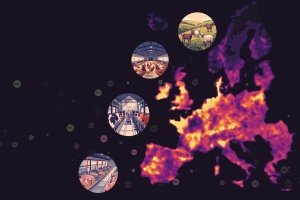
The Climate Emergency Brake Europe Needs: How livestock pollution hotspots put the EU’s climate and clean-air targets at risk
Produced in collaboration with the University of Oxford, this report reveals the scale and concentration of livestock methane and ammonia pollution across Europe.

Tracking Methane Action in the Dairy, Coffee and Retail Sectors: October 2026 insights
The fourth edition of our methane rankings for major food company finds signs of momentum from dairy companies, progress from just one coffee company and continued leadership vacuum from retailers.