February 2026 newsletter – Investor methane risk, fashion microplastics, and tackling greenwash
As 2026 gets well underway, we wish you a belated Happy New Year! It’s been a busy start for the Changing Markets Foundation team. Here’s some of what we’ve been up to.
New report: Materially Neglected — Agricultural Methane and Investor Risk
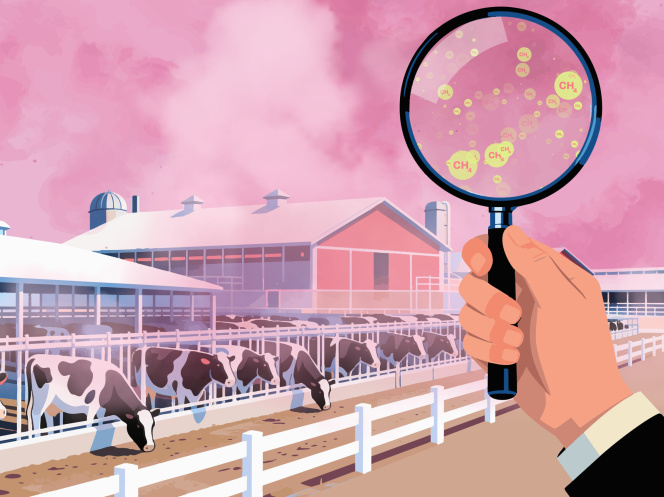
For investors, methane presents both a growing financial risk and a major climate opportunity. That’s the message at the heart of our latest report, Materially Neglected: Agricultural Methane and Investor Risk, in collaboration with Planet Tracker.
Cutting methane is one of the fastest and most cost-effective climate actions available. Yet, instead of seizing this opportunity, most investors still have a methane blindspot, with 80% of the 25 investors assessed scoring less than 10% on methane.
Only Norges Bank Investment Management (NBIM), J.P. Morgan, and Capital Group completed the questionnaire for the report. NBIM stands out as the only investor with agriculture-specific methane policies. As a major shareholder in companies such as Nestlé and Tesco, it is well-positioned to drive stronger investor pressure for methane reductions.
The report has so far been covered by the FT’s Sustainable Views, among others.
We’ll be taking the findings forward in our upcoming webinar with Planet Tracker and Green Century Capital Management, The Hidden Climate Risk: Methane’s Impact on Investment Returns. Join the discussion on 26 February.
Spreading the word on methane
At the same time we are continuing to get the message out on the need for methane action across the board. Check out our latest video, in which, together with Food Facts, we collaborated with food policy specialist Gavin Wren and leading methane scientist Nicholas Carter to spotlight our Methane Action Tracker, which helps you see which countries and companies are acting on methane, and which are not.
Fashion and plastics webinar
On 20 January, experts from Plastic Soup Foundation and The Pew Charitable Trusts joined our Senior Campaigns Manager, Urska Trunk, and more than 150 participants from around the world, for an evidence-based discussion on fashion and microplastic pollution.
The webinar, a follow-up to our December report Spinning Greenwash: How the fashion industry’s shift to recycled polyester is worsening microplastic pollution, explored how recycled polyester continues to shed microplastics, the broader role of textiles in the global plastics crisis, and how many proposed solutions remain cloaked in greenwash. Drawing on the latest scientific research and policy analysis, the conversation focused on what the evidence shows, where existing approaches are falling short, and what needs to change.
Missed it? Not to worry, the recording is available here:
Coming soon
As 2026 brings new challenges for the planet, food security and the climate, we’re excited to be renewing two critical campaign areas to help meet the moment.
As a recent cross-border investigation by VoxEurop shows, 14 petrochemical giants, including Shell, TotalEnergies and ExxonMobil, are promoting chemical recycling as a “circular” and “climate-friendly” solution to the plastic crisis, despite the most common technologies, such as pyrolysis, relying heavily on fossil-based inputs and potentially being more carbon intensive than conventional plastic production. These findings come as EU policymakers decide whether such practices will count as “recycled content.” Our new project, part of Talking Trash, will take a deeper dive into these issues as this debate evolves.
At the same time, we are relaunching our Fishing the Feed campaign, shining a renewed spotlight on industrial aquaculture. It is the fastest-growing food production sector and a key part of the “Blue Economy” (using the ocean for jobs and food while also protecting marine ecosystems). However, the aquaculture industry relies on millions of tonnes of wild-caught fish for feed. This contributes to overfishing, damages fragile marine ecosystems and robs local communities of their food and livelihoods.
Watch this space for updates on both campaigns.
The greenwash corner
In January, the UK’s Competition & Markets Authority issued guidance clarifying that responsibility for environmental claims runs across supply chains, not just with the company presenting them to consumers. Retailers, brands, manufacturers and suppliers can all be accountable where claims rely on shared information, and businesses can’t simply pass the buck if the data is weak.
It’s a clear signal that green claims must be accurate, evidence-based and not misleading. For more on this topic, check out our January 2024 op-ed in Business Green.
We’re also watching closely in support of Adfree Cities, which has submitted a complaint to the UK’s Advertising Standards Authority over McDonald’s “Big Arch” adverts.
Welcome Emma
Emma Thomson joined Changing Markets in January 2026, after over six years at Global Canopy, where she most recently led the Research Workstream of the Corporate Performance programme. This involved leading research across multiple projects to advance forest-risk commodity supply chains that are free of deforestation, ecosystem conversion, and associated human rights abuses.
For over four years, she led the Forest 500, holding companies and financial institutions accountable for their disproportionate impact on supply chains, and later also led the research team across the Floresta 250, Forest IQ and DEFT, creating data to enable better corporate and financial decision-making on deforestation and human rights.
Emma has a BSc in Geography from Durham University and an MSc in Global Environment, Politics and Society from the University of Edinburgh.
In her spare time, Emma loves walking in forests, cooking (always without a recipe), and trying lots of different crafts.
In the media
You might also like...
Dairy and Coffee Methane Action Tracker
Shelved Again: Supermarkets’ Missing Action on Methane
The Agricultural Methane Gap: Recommendations for the Global Stocktake
This briefing provides an overview of 27 country NDCs and National Energy and Climate Plans (NECPs), along with the EUs NDC, outlining how they address agricultural methane, the largest source of global meth...